 NGN
 KES - Kenya
 UGX - Uganda
 TZS - Tanzania
 RWF - Rwanda
 ZAR - South Africa
 USD - Zimbabwe
 GHS - Ghana
 ETB - Ethiopia
 ZMW - Zambia
 USD - International

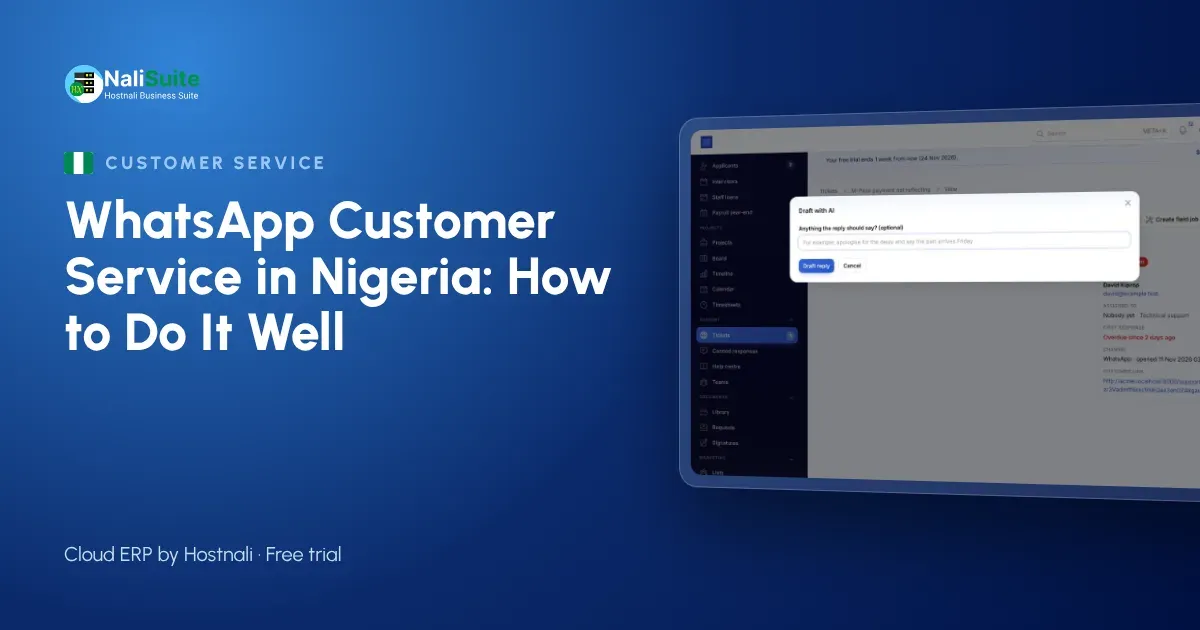
For many Nigerian customers, WhatsApp is the shop front. They ask for prices there, send their delivery address there and complain there when an order is late. A business that answers fast wins the sale; one that leaves “Good afternoon, is this available?” unread for a day loses it.
Why WhatsApp needs a team, not a phone
A single phone on the counter in Lagos has three problems. Only the person holding it can reply. The history leaves with that person when they change jobs. And there is no way to see which customers are still waiting. None of that matters at ten messages a day. At fifty, it costs sales.
Consider a fashion brand in Lekki that sells through Instagram and closes almost every sale on WhatsApp. Two sales girls share the business phone, the dispatch rider calls for addresses, and the owner answers complaints from her own line. Customers who message twice get two different prices, and transfer receipts sent as screenshots get lost in the scroll.
A five-step setup
- Move the number to a shared inbox. Connect your business number through the WhatsApp Business Cloud API to NaliSuite Helpdesk, so chats become tickets the whole team sees.
- Decide who handles what. Sales questions to sales, orders to the shop in Port Harcourt, payment issues to accounts. Assignment rules do this automatically.
- Write ten quick replies. Cover opening hours, delivery, payment methods, returns and how to order. Review them every month.
- Set a reply target. Agree a first-reply time for opening hours and for evenings, and let the helpdesk flag chats that are running late.
- Connect sales and invoicing. Send quotations and invoices from the same system, so the documents in the chat match your books.
Selling inside the chat
Many WhatsApp conversations are sales waiting to happen. A quotation sent from Sales can be accepted online, turned into an order and invoiced without retyping. The invoice from Invoicing carries a pay link, and the payment is matched to it when the money arrives. That is quicker for a customer in Ibadan than visiting the shop, and safer than accepting a screenshot.
For promotions, use approved templates in Marketing and send them only to customers who opted in.
How to tell if it is working
| Measure | What to look for |
|---|---|
| First reply time | Falling, and steady at weekends |
| Open tickets at closing time | Close to zero |
| Repeat questions | Turned into quick replies |
| Paid invoices sent by WhatsApp | A rising share of sales |
Read more on the WhatsApp feature page.
Common questions from teams getting started
Will customers notice the change? Not in a bad way. They write to the same number; they just get answers faster and from whoever is free, in Lagos or anywhere else.
What about voice notes and photos? They arrive in the ticket like any other message, so a colleague can listen to a voice note from a customer in Abuja or see a photo of a damaged item without asking for it again.
How do we hand over between shifts? Open tickets stay open with their owner and history. The next shift sees exactly where each conversation stands.
Can managers see how the team is doing? Yes. Reply times and open tickets per person show who needs help, and which questions should become quick replies.
Turning chats into repeat business
Every WhatsApp conversation linked to a customer record builds a history: what they bought, what they asked about, what they complained about. Over time that history lets you follow up at the right moment, for example reminding a customer in Port Harcourt when a product they asked about is back in stock, or sending an opted-in offer to customers who bought in the last three months. The CRM and contacts apps keep that history in one place.
WhatsApp service in Nigeria: what to keep in mind
Bank transfer is still the most common way Nigerian customers pay a business they found online, and screenshots of transfer receipts are easy to fake. Sending a proper invoice with a pay link in the chat, and confirming payment from your own records rather than a screenshot, protects both sides. Larger businesses should also keep FIRS e-invoicing in mind for the invoices they send.
Nigerian customers are used to haggling in chat, so agree in advance how much room staff have on price and write it into your quick replies. Delivery questions are the other big category: Lagos traffic means “when will it arrive?” is asked again and again. A saved reply that explains your delivery windows for the mainland and the island, and a habit of sending the rider’s details when the order leaves, cuts those messages sharply.
Frequently asked questions
Can customers pay by bank transfer from the WhatsApp invoice?
Yes. The pay link on the invoice lets customers pay by card or bank transfer through your own payment provider, and the invoice is marked paid when the money arrives.
How do I stop fake transfer receipts?
Check payment against your own records, not the screenshot. When payments come through the invoice pay link, NaliSuite marks the invoice paid itself, so a screenshot is never the proof.
Do I need the WhatsApp Business API?
Yes, to share one number across a team you connect it through the official WhatsApp Business Cloud API. Our team can help a Nigerian business set it up.
Can several staff answer at the same time?
Yes. Messages arrive as tickets in the helpdesk, so several people can answer different customers from one number, each with the full history.
Try NaliSuite
NaliSuite brings WhatsApp, helpdesk, sales, invoicing and online payments into one cloud ERP, from ₦3,125 a month. Start a free trial from the plans page and connect your business number.