 NGN
 KES - Kenya
 UGX - Uganda
 TZS - Tanzania
 RWF - Rwanda
 ZAR - South Africa
 USD - Zimbabwe
 GHS - Ghana
 ETB - Ethiopia
 ZMW - Zambia
 USD - International

A customer in Abuja sends a message: “How much for 50 branded polo shirts?” What happens next decides whether you get the job. Reply with just a figure and you start a negotiation. Reply with a clear quotation the same day and you are already ahead.
This guide follows the whole quotation process in a Nigerian business, from the first enquiry to the paid invoice, and explains what to do at each stage.
Stage 1: Understand the request
Before you price anything, ask the questions that change the price:
- How many, what size, what colour, what quality?
- Where and when is delivery?
- Is there a budget or a deadline for decisions?
- Who approves the purchase, and do they need any documents from you?
For the polo shirts, that means fabric, sizes, number of print colours, the logo file and the delivery date. Five minutes of questions saves a revised quote later.
Stage 2: Work out your price
List every cost:
- Materials or goods, at current supplier prices.
- Labour, in hours or days.
- Transport and delivery, including fuel.
- Any outside work, such as printing or installation.
- Your margin.
Many Nigerian suppliers underquote because they forget transport, generator diesel or the cost of their own time. Write each one down, even if you round the final figure.
Stage 3: Write the quotation
Your quotation should include:
- Your details: business name, CAC registration number, address, phone, email and TIN.
- The customer’s details: name, company and contact person.
- A number, date and validity: for example, “Valid for 7 days”. With naira prices moving, many suppliers keep validity short.
- A clear description: “50 polo shirts, 100% cotton, sizes as per attached list, one-colour logo printed on the left chest.”
- Line items: quantity, unit price and total for each.
- VAT: if your business is VAT-registered, add VAT at 7.5% on a separate line. If not, do not charge it.
- Payment terms: for example, “70% advance, 30% on delivery, by bank transfer.”
- Delivery terms: where, when and who pays for transport.
- How to accept: sign and return, issue a purchase order or accept online.
The free VAT calculator is handy when a client asks for a VAT-inclusive price.
Stage 4: Send it properly
Send a PDF or a link, not a typed message. A PDF looks professional, can be forwarded to the person who approves it and cannot be misread.
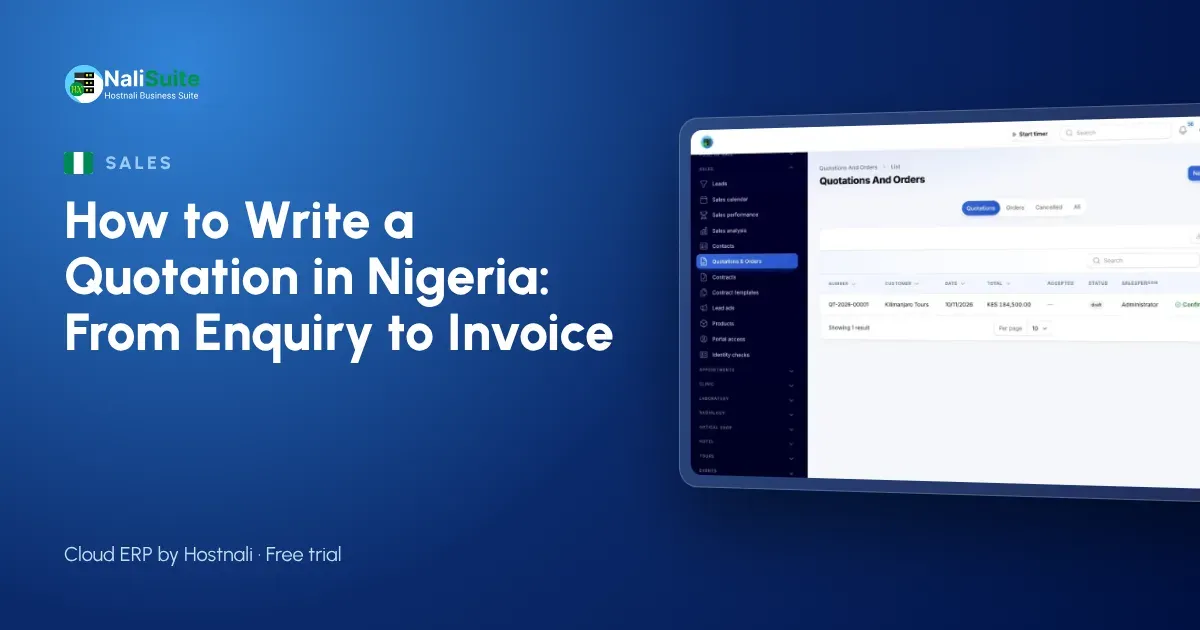
NaliSuite Sales and Quotations builds the quotation from your price list with VAT worked out, and sends it as a branded PDF by email or WhatsApp. The customer opens a secure link and accepts it, and you are notified immediately.
Stage 5: Follow up
Most quotes are not rejected; they are forgotten. Follow up two or three days after sending:
- “Did you receive the quotation for the polo shirts?”
- “Is there anything you would like us to change?”
- “When are you planning to decide?”
Track every open quote. A pipeline in the CRM app shows which quotes are waiting, which were won and which were lost.
Stage 6: Handle changes
If the customer wants a lower price, change something real: quantity, specification, delivery date or payment terms. Then issue a revised quotation with a new reference, such as Q-0213-R1, so everyone works from the same document.
Stage 7: From acceptance to invoice
When the customer accepts:
- Confirm the order in writing.
- Request the advance payment if you agreed one.
- Buy materials only after the advance arrives.
- Deliver, then invoice the balance.
In NaliSuite, an accepted quotation becomes a sales order and then an invoice, without retyping. NaliSuite Invoicing supports deposits and partial invoices, and each invoice can carry a link to pay online (see online payments). Where your business must issue e-invoices through the Nigeria Revenue Service, the invoice can be sent through the e-invoicing connection using your own credentials.
Common mistakes in Nigerian quotations
- No validity period. Customers return months later expecting the old price.
- Forgetting costs. Diesel, transport and bank charges eat the margin.
- Vague scope. “Branding job” leads to disputes about what was included.
- VAT charged by an unregistered business. This causes problems for the customer and for you.
- No follow-up. The job goes to whoever called back.
Quoting for companies with procurement teams
Larger Nigerian companies often require vendor registration before they can accept your quote: a form, your CAC documents, TIN and bank details. Complete it early, ideally before the first enquiry, so a winning quote is not held up while you are added to their system. Keep a folder with these documents ready to send, and note each company’s procurement contact so follow-ups reach the right person.
Frequently asked questions
Is a quotation the same as a proforma invoice?
Not quite. A quotation is an offer. A proforma invoice is usually issued once the customer agrees, so they can process payment before the final invoice.
Should I include my CAC number?
Yes. Corporate buyers often require it, and it shows you are a registered business.
How much advance should I ask for?
It depends on your costs and the customer. Many suppliers ask for enough to cover materials. State it as a percentage in your terms.
Can I quote in dollars?
You can state that prices depend on the exchange rate, but invoices to Nigerian customers are normally in naira. Ask your accountant if you deal in foreign currency.
Try NaliSuite
NaliSuite helps Nigerian businesses send quotes clients accept online, then invoice, collect and e-invoice from the same record. Plans start at ₦3,125 a month with a free trial; see the plans or read more about NaliSuite.